
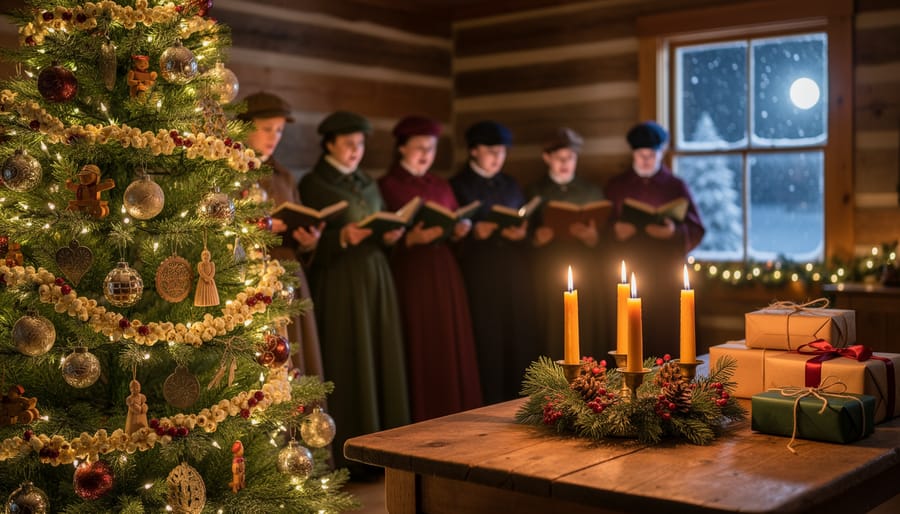
Christmas in Ontario comes alive through five enduring traditions that have shaped our holiday celebrations for centuries: decorating evergreen trees, singing carols, exchanging gifts, preparing festive feasts, and lighting candles. These customs trace their roots through medieval Europe, Victorian England, and immigrant communities who brought their heritage to Canadian soil, evolving into the vibrant celebrations we experience today at heritage events across the province.
At Ontario’s Through the Ages Christmas celebrations, you’ll discover how each tradition transformed through different historical periods. The Germans introduced decorated fir trees in the 16th century, Queen Victoria popularized them across the British Empire, and settlers brought them to Ontario’s log cabins and grand estates. Carolling began with Latin hymns in medieval churches before becoming the door-to-door neighbourhood tradition we know today. Gift-giving evolved from simple handmade tokens to elaborate Victorian presentations wrapped in ribbon and lace.
When you meet the cast at these heritage celebrations, costumed interpreters demonstrate how families prepared their holiday feasts, from roasting chestnuts over open fires to baking traditional puddings weeks in advance. You’ll see candles illuminating dark winter evenings before electricity, and learn why these simple flames became powerful symbols of hope and community spirit that we still honour in modern Christmas services and displays.
How We Chose These Five Traditions
We chose these five traditions because they’ve stood the test of time, evolving across centuries while remaining vibrant parts of Ontario’s Christmas celebrations today. Each one offers something you can actually do, whether that’s decorating a tree, singing carols, or gathering around a fire, rather than simply observe. These customs also reflect the beautiful diversity of influences that shaped Canadian Christmas, from ancient pagan rituals and medieval Christian practices to Victorian innovations and the multicultural communities that call Ontario home.
By focusing on traditions that invite hands-on involvement, we’re highlighting experiences you can enjoy at A Christmas Through the Ages events and similar heritage celebrations across the province. These aren’t museum pieces behind glass, they’re living customs that connect us to our shared past while bringing communities together in the present.
1. Decorating the Evergreen Tree, From Pagan Roots to Victorian Splendour
Long before Victorian parlours glowed with candlelit firs, ancient peoples brought evergreen boughs indoors as symbols of enduring life through winter’s darkness. Celts, Romans, and Norse cultures all honoured the winter solstice by decorating with holly, ivy, and pine, a defiant green promise that spring would return. These pre-Christian customs, much like the Festival of Lights origins in other traditions, celebrated light triumphing over the longest night.
The Christmas tree as we recognize it took shape in 16th-century Germany, where families decorated small firs with apples, nuts, and paper roses. But the tradition exploded across the English-speaking world in 1848 when the Illustrated London News published an engraving of Queen Victoria, Prince Albert, and their children gathered around a lavishly decorated tree at Windsor Castle. Suddenly, having a tree became fashionable, a mark of modern domesticity and family togetherness.
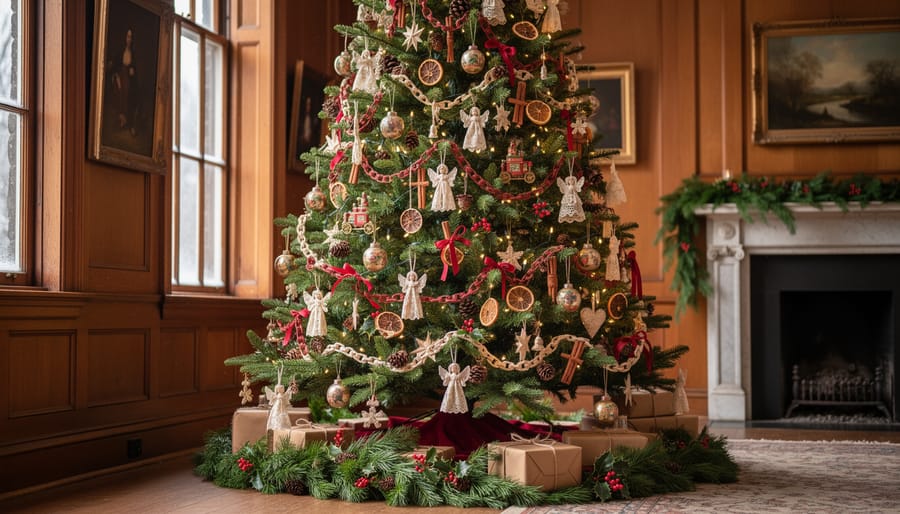
Ontario families carried this tradition forward, and today’s A Christmas Through the Ages events invite you to step into that Victorian moment. At heritage sites across the province, volunteers recreate period decorating techniques using handmade ornaments, strung popcorn and cranberries, paper chains, carved wooden toys, and beeswax candles clipped carefully to branches. The scent of fresh pine mingles with wood smoke as interpreters in period dress demonstrate how families would have prepared their trees, often on Christmas Eve itself rather than weeks in advance.
Many heritage sites welcome volunteers to help dress their trees each December. You might string garlands, craft traditional ornaments in workshops, or assist with community tree-lighting ceremonies that echo Victorian public celebrations. It’s a hands-on connection to centuries of winter joy, transforming history into something you can touch, smell, and share.
2. Carolling, Songs That Echo Through Centuries
Carolling might feel like a spontaneous burst of holiday cheer, but the tradition has roots stretching back to medieval Europe, where wassailers roamed from door to door singing for food, drink, and good fortune. These early songs weren’t gentle hymns, they were boisterous, sometimes rowdy celebrations tied to the winter solstice and pagan midwinter festivals. As Christianity spread, the church gradually wove sacred themes into the practice, transforming raucous folk tunes into the carols we recognize today.
By the Victorian era, carolling had evolved into a more organized affair. Church choirs polished the melodies, and hymn writers like Charles Wesley penned beloved standards such as “Hark! The Herald Angels Sing.” Communities embraced the custom of gathering neighbours for evening walks through snowy streets, lanterns in hand, voices lifted in harmony. This was carolling as community-building, a way to strengthen bonds and share joy during the darkest nights of the year.
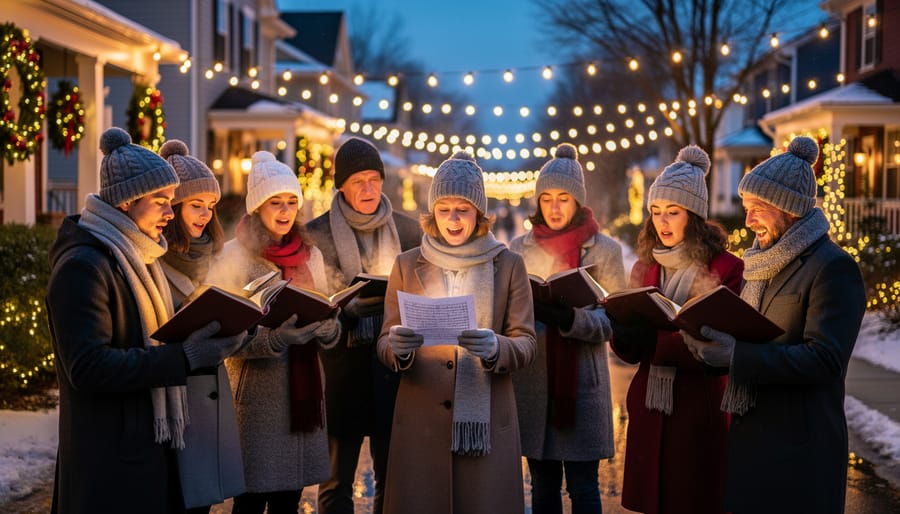
Ontario has carried this spirit forward beautifully. From small-town church steps to bustling downtown squares, carolling remains a cherished part of the province’s Christmas celebrations. A Christmas Through the Ages events often feature period-appropriate carolling sessions, where participants sing songs from different eras, medieval wassail tunes, Victorian hymns, and early 20th-century favourites. You might hear “Good King Wenceslas” performed as it would have sounded in the 1800s, or join a lantern-lit procession singing “Silent Night” in its original German.
These gatherings welcome singers of all abilities and backgrounds, creating moments of connection that transcend generations. Local carolling groups often recruit volunteers to lead songs or simply swell the chorus, keeping this centuries-old tradition alive and inviting new voices into the fold.
3. The Yule Log, Ancient Fire Ceremony Meets Festive Hearth
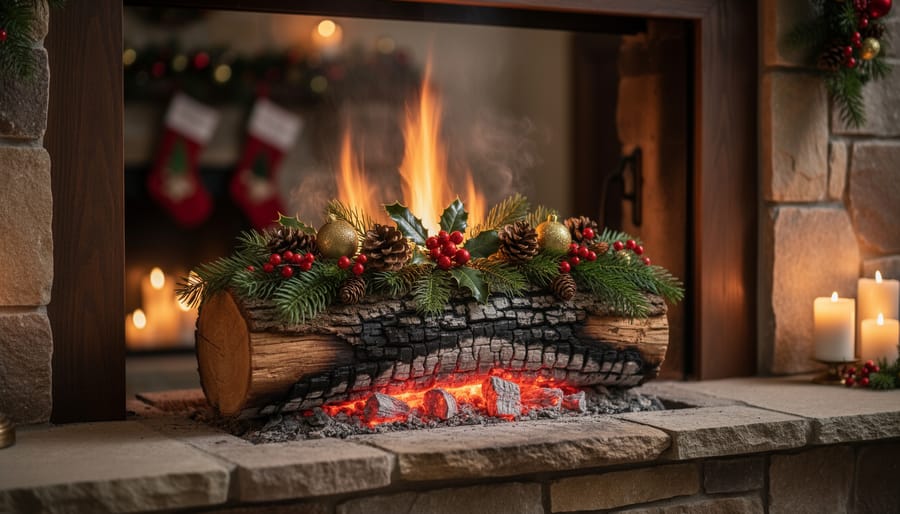
Long before Christmas trees glittered in Victorian parlours, families across Northern Europe gathered around a massive log burning in the hearth, its flames promising light through the darkest nights of winter. The Yule log tradition stretches back to Norse and Celtic midwinter festivals, when communities selected the largest, hardiest log they could find, often oak or ash, and ceremonially burned it to honour the sun’s return and ensure prosperity for the coming year. The log had to burn for twelve days, and households carefully preserved a charred piece to kindle the next year’s fire, creating an unbroken chain of warmth and protection.
As Christianity spread across Europe, the pagan fire ceremony merged with Christmas Eve celebrations. Families blessed the log with wine or ale, adorned it with evergreen boughs and ribbons, and gathered for prayers and songs as it burned. The ritual carried deep meaning: a log that burned brightly foretold good fortune, while one that sputtered warned of hardship ahead.
Today’s heritage events across Ontario bring this ancient ceremony vividly to life. Living history interpreters demonstrate the selection and blessing process, explaining the symbolism behind each step. Visitors watch as the log is carried to the hearth with ceremony, sometimes accompanied by period carols. Many event guide listings feature interactive demonstrations where families can help gather greenery to decorate a Yule log or learn about the French-Canadian adaptation, the bûche de Noël, a rolled sponge cake decorated to resemble a festive log.
Modern Ontario families keep the tradition alive in ways both old and new, from burning a small decorated log in the fireplace to sharing slices of chocolate bûche at the holiday table.
4. Advent Calendars and Countdowns, Anticipation Across the Ages
The Advent calendar began as a spiritual discipline, not a festive countdown. In early Christian communities, Advent marked four weeks of fasting and prayer before Christmas, a solemn preparation for Christ’s birth. German Lutheran families in the 1800s softened this observance by creating visual countdowns, parents drew 24 chalk marks on doors, and children erased one each day. By 1902, a Hamburg publisher printed the first paper calendar with small doors to open, transforming anticipation into daily delight.
The tradition crossed the Atlantic with German immigrants who settled across Ontario, bringing their calendar customs to communities like Kitchener-Waterloo and beyond. Victorian-era families fashioned homemade versions with Bible verses, while mid-century marketing introduced the chocolate-filled calendars that now dominate December shopping aisles. Today’s versions range from simple paper grids to elaborate wooden boxes with tiny drawers, but the core appeal remains unchanged: building excitement one day at a time.
Heritage events across Ontario recapture Advent’s communal joy through immersive experiences that blend historical and modern practices. Instead of solitary chocolate eating, these celebrations turn the countdown into a shared journey. Many sites create interactive Advent experiences featuring:
- Daily craft stations where families make Victorian-style ornaments or handwritten cards
- Historical story reveals that share Christmas tales from different eras and cultures
- Period recipe tastings of traditional treats like gingerbread and wassail
- Vintage toy displays showcasing the simple playthings children once anticipated
- Community service projects connecting Advent’s original spirit of preparation with local giving
These activities mirror the winter activities that heritage sites offer year-round, but with special seasonal magic. Storytelling windows open to reveal new narratives each evening, and some events host community countdowns where neighbours gather to mark each passing day together, recreating the collective anticipation that made Advent meaningful long before commercial calendars existed.
5. Gift-Giving and Stockings, From St. Nicholas to Santa Claus
The tradition of Christmas gift-giving stretches back over 1,700 years to St. Nicholas of Myra, a 4th-century bishop known for secretly leaving coins in the shoes of those in need. His feast day on December 6th became a time for children to receive small presents, a custom that travelled across Europe and evolved with each culture it touched.
During medieval times, gift-giving happened on various winter feast days rather than Christmas Day itself. Lords gave their servants boxes of goods on St. Stephen’s Day (December 26th), creating the origins of Boxing Day still celebrated across Canada. Children received simple treats like nuts, apples, and small wooden toys carved by family members.
The Victorians transformed gift-giving into the elaborate Christmas morning tradition we recognize today. They popularized the custom of hanging stockings by the fireplace, inspired by legends of St. Nicholas dropping gold coins down a chimney that landed in stockings hung to dry. Victorian stockings bulged with oranges, sweets, and small handmade treasures.
The Dutch Sinterklaas merged with British Father Christmas and American commercial culture to become the jolly red-suited Santa Claus of the 20th century. This transformation brought gifts from modest homemade items to the wrapped packages under trees that define modern celebrations.
A Christmas Through the Ages events bring this evolution to life through hands-on workshops where families craft period-appropriate toys like corn husk dolls, wooden spinning tops, and fabric sachets. Storytelling sessions share gift-giving customs from the diverse cultures that built Ontario’s communities, from Ukrainian didukh wheat bundles to Italian Befana traditions. Volunteers often dress as historical figures to demonstrate how children received gifts in different eras, making the connection between past generosity and present joy tangible for visitors of all ages.
Experience These Traditions at Heritage Events Across Ontario
Discovering these traditions firsthand transforms them from history-book facts into living memories. Heritage events across Ontario, from museums and historic villages to community halls, recreate Christmas celebrations spanning centuries, letting you step into Victorian parlours, medieval great halls, or pioneer cabins. You’ll make pomander balls just as Elizabethans did, taste syllabub recipes from 18th-century kitchens, and help light candles on a 1900s tree. These aren’t passive exhibitions; they’re participatory experiences where you become part of the story.
Volunteers are the heart of these events, whether you’re demonstrating period crafts, leading carolling groups, or helping families write letters to St. Nicholas. Many sites offer training sessions that deepen your own understanding while you share traditions with visitors. It’s a chance to connect with your community, learn skills like blacksmithing demonstration or historical cooking, and keep these customs vibrant for children discovering them for the first time.
Are these heritage Christmas events family-friendly?
Absolutely. Most events design activities specifically for children while offering depth that engages adults, from hands-on crafts to storytelling sessions that captivate all ages.
Do I need historical knowledge to participate?
Not at all. Guides and volunteers provide context, and the hands-on nature means you learn by doing rather than studying.
How can I volunteer at these events?
Contact heritage sites directly through their websites or social media, usually starting in early autumn. Many welcome newcomers and provide training.
Are events accessible for visitors with mobility challenges?
Accessibility varies by venue, so check individual site details beforehand. Many historic locations have made adaptations while some older buildings have limitations.
Ontario’s festival culture thrives because communities value these shared experiences. When you attend, you’re not just observing history, you’re ensuring it endures, creating new traditions alongside the old, and building connections that stretch across generations and backgrounds.